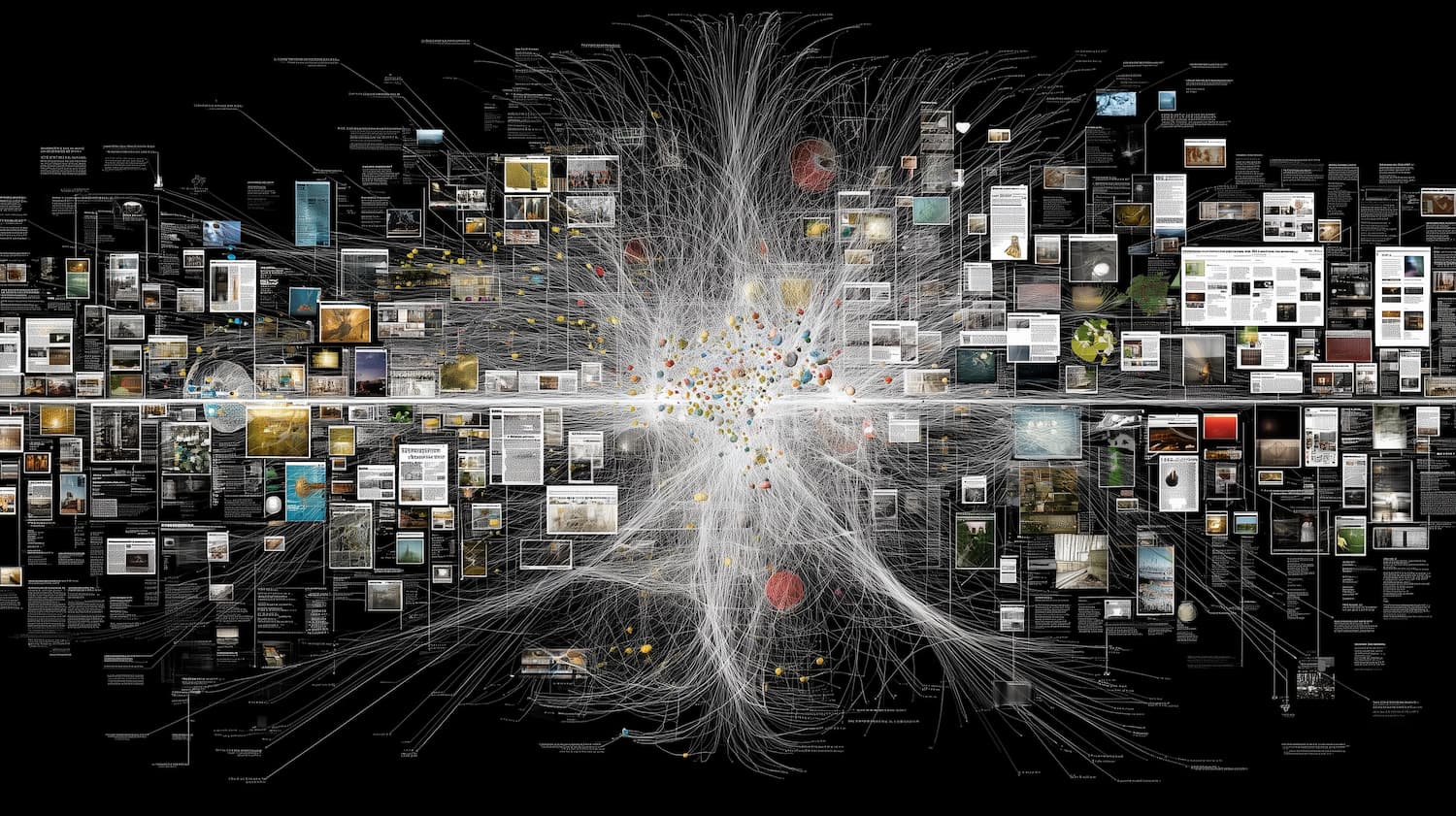
Cultural heritage institutions – museums, archives, libraries, and galleries – have always faced a fundamental challenge: how to organize, preserve, and provide access to vast bodies of knowledge. In 2026, this challenge has become even more complex. Collections are increasingly digitized, audiences are global, and expectations for discoverability and contextualization have risen dramatically. Against this backdrop, ontologies and semantic web technologies have emerged as transformative tools, reshaping how cultural data is structured, connected, and interpreted.
At the heart of this transformation lies the concept of the ontology. In the context of information science, an ontology is a formal representation of knowledge: a structured model that defines concepts, categories, and relationships within a domain. Unlike traditional classification systems, ontologies are designed to capture meaning rather than merely assign labels. For cultural heritage institutions, this distinction is crucial. Artifacts, artworks, manuscripts, and historical records are rarely isolated entities; they are embedded in rich networks of historical, social, and symbolic relationships.
Semantic web technologies build upon ontological models to enable machine-readable meaning. Using standards such as RDF (Resource Description Framework) and OWL (Web Ontology Language), institutions can describe resources in a way that computers can interpret and link. This shift from static metadata to semantic representation has profound implications. Data ceases to be a set of disconnected records and becomes a dynamic graph of knowledge, where entities and relationships can be queried, inferred, and reused across systems.
One of the most visible benefits of ontologies in museums and archives is improved interoperability. Cultural heritage data is notoriously heterogeneous. Different institutions use varying cataloging practices, terminologies, and database structures. Without semantic alignment, integrating datasets becomes costly and fragile. Ontologies provide a shared conceptual framework that allows disparate collections to communicate. By mapping local schemas onto common ontological models, institutions can exchange and combine information without sacrificing specificity.
In practice, this means that a single artifact can be understood across contexts. A Renaissance painting, for example, may be described in terms of artist, technique, and provenance within a museum database. In an archival system, related documents may reference commissions, correspondence, or restoration records. Semantic technologies allow these descriptions to be connected through shared identifiers and relationships. Researchers and users can traverse these links seamlessly, discovering connections that would otherwise remain hidden.
Discoverability itself is another domain significantly enhanced by semantic approaches. Traditional keyword-based search struggles with ambiguity, synonymy, and contextual nuance. Ontology-driven systems, by contrast, enable concept-based retrieval. A user searching for “Impressionism” can retrieve not only explicitly tagged works but also related artists, movements, influences, and locations. Semantic queries operate on meaning rather than literal text, yielding richer and more relevant results.
Beyond search, semantic technologies enable advanced forms of knowledge exploration. Graph-based visualizations, increasingly common in 2026, allow users to navigate relationships between people, places, events, and objects. Such interfaces transform passive browsing into interactive discovery. For educational and curatorial purposes, this capability is invaluable. Exhibitions can be dynamically assembled based on thematic or historical relationships rather than fixed categorizations.
Another critical contribution of ontologies lies in contextualization. Cultural heritage objects derive much of their significance from context: historical period, cultural background, material conditions, and interpretive narratives. Semantic models excel at representing such complex structures. Relationships between entities – an artifact’s creator, its geographic origin, its symbolic references – can be explicitly encoded. This structured context supports not only scholarly research but also public engagement, enabling digital storytelling and adaptive content delivery.
Machine reasoning further amplifies these possibilities. Ontological frameworks support inference mechanisms that derive implicit knowledge from explicit statements. In museum and archival systems, reasoning can reveal previously unnoticed associations. If two artifacts share creators, locations, or stylistic attributes, semantic engines can identify and suggest these connections. While human expertise remains central, computational inference augments curatorial and research workflows, especially when dealing with large-scale datasets.
The role of linked data has also become central to cultural heritage strategies. In 2026, many institutions publish their collections as linked open data, contributing to global knowledge ecosystems. By exposing structured, semantically annotated data, museums and archives enable reuse by researchers, educators, developers, and other institutions. Cultural data thus transcends institutional boundaries, participating in a broader web of knowledge that includes historical databases, academic resources, and digital humanities platforms.
Importantly, semantic web technologies are not merely technical upgrades. They reflect a conceptual shift in how cultural knowledge is perceived. Instead of isolated catalogs, institutions increasingly view their data as interconnected networks of meaning. Ontologies formalize this perspective, offering models that capture both domain-specific detail and cross-domain relationships. This alignment between conceptual and computational structures enhances the expressive power of digital collections.
Challenges, however, remain significant. Ontology development is intellectually demanding, requiring careful modeling decisions and domain expertise. Cultural heritage domains are inherently interpretive and often contested. Representing historical, artistic, or cultural concepts within formal structures necessitates sensitivity and reflexivity. Moreover, maintaining semantic systems involves ongoing curation, versioning, and governance to ensure consistency and relevance.
Scalability and performance considerations also persist. Semantic technologies, while powerful, can be resource-intensive when applied to large graphs. Query optimization, indexing strategies, and hybrid storage architectures are therefore active areas of development. Advances in RDF engines, distributed processing, and hardware capabilities have mitigated many limitations, yet engineering expertise remains essential for robust deployment.
Ethical and epistemological issues further complicate the landscape. Decisions about classification, identity, and relationships can encode particular perspectives while marginalizing others. In 2026, institutions increasingly recognize the need for pluralistic and inclusive modeling practices. Ontologies must accommodate multiple viewpoints, cultural frameworks, and evolving interpretations. Semantic technologies, properly designed, can support such diversity, but only through deliberate methodological choices.
Despite these complexities, the trajectory is unmistakable. Semantic web technologies and ontologies have moved from experimental initiatives to strategic infrastructure within cultural heritage institutions. They enhance interoperability, enrich discovery, support contextualization, and enable innovative forms of engagement. Perhaps most importantly, they align digital systems with the intrinsic relational nature of cultural knowledge.
As museums and archives continue to digitize, expand, and globalize their collections, the need for meaningful data structures becomes ever more pressing. Ontologies provide the conceptual scaffolding, while semantic web technologies deliver the operational mechanisms. Together, they transform cultural heritage data into living knowledge networks – systems capable of supporting research, education, preservation, and public exploration in ways that traditional models could scarcely imagine.
In this evolving ecosystem, semantic technologies do not replace human interpretation or curatorial judgment. Rather, they amplify them. By structuring meaning in machine-readable forms, cultural heritage institutions extend the reach and depth of their knowledge, ensuring that collections remain accessible, intelligible, and interconnected in an increasingly data-driven world.