Search isn’t just a list of results anymore. Modern search is an astute AI companion, deftly navigating the web’s vast oceans of information. The secret weapon that empowers this new era search is semantic search, giving the machines a more human-like ability to understand.
Gone are the days when you had to struggle with crafting the perfect search phrase. Today’s search tools understand the context, the user intent, and dig deep into data to offer not just more relevant results but truly meaningful ones.
Imagine searching for “apple”, a simple word with multiple interpretations. Classical keyword search could bombard you with results related to the tech giant, the fruit, the record company, or a dozen other ‘apples’.
Now, imagine typing, “which apple has the most health benefits?” into today’s search engines. You’re likely to find a detailed comparison of various apple varieties’ nutritional values. Semantic search is the difference between these two experiences.
Shedding Light on Semantic Search
Imagine asking a friend about the best apple for making apple pie. Your friend wouldn’t reference big technology companies or record labels but would understand you’re referring to a type of fruit and suggest suitable varieties. This basic yet nuanced act of comprehending context, meaning, and intent is what semantic search strives to emulate within the realm of AI-driven search technology.
Differing from traditional keyword-based search, which treats queries like a puzzle of specific terms, semantic search dives deeper. It employs natural language processing, machine learning, and entity recognition, creating a more resourceful, human-like search. It firmly plants itself in the user’s shoes to sieve through the abundance of internet data and retrieve meaningful, contextually relevant results.
Consider knowledge graphs in this mix as databases that package related pieces of information together. These graphs foster connections between disparate data points, further fueling a semantic search engine’s ability to infer and retrieve results in sync with a user’s intent.
Through this blend of technology, semantic search revolutionizes how we interact with the digital landscape, exhibiting an intelligent, contextual understanding of queries that surpasses old keyword-oriented norms. With the wide realm of AI algorithms at their disposal, search engines are no longer mere extensions of your keyboard but smart companions that understand you and your inquiry’s multifaceted layers.
Pivotal AI Technologies for Semantic Search
To demystify semantic search, let’s identify the essential AI technologies that drive it:
1. Natural Language Processing (NLP): Think of NLP as the AI’s own Rosetta Stone. It allows the artificial intelligence to decode the various elements of human language and respond in kind, translating our complex scripting into something machines can fathom.
2. Machine Learning: Next up, we have machine learning. It’s akin to the AI’s innate curiosity and ability to learn from patterns in data. This self-adjusting mechanism refines its own understanding, honing the skill to retrieve more accurate information over time.
3. Knowledge Graphs: Picture these as AI’s spider web of insights. By connecting entities and concepts, these graphs help AI’s trace contextual relevance and latent links amongst a myriad of data points.
4. Contextual Embeddings: This last component is a unique digitized representation of words and phrases. What makes it special? It embodies meaning over literal transcription; it’s an intelligent encoding system that places a phrase or word within its semantic sphere.
Unraveling the fundamental AI technologies used in semantic search allows us to appreciate the level of sophistication involved in bringing such a service to life. It indeed mirrors the way humans understand, learn, connect, and comprehend languages.
Dispelling Misconceptions: The True Nature of Search Engines
To get a clear understanding of semantic search, it’s critical to dispel some commonly held misconceptions. One prevalent myth is that search engines only match keywords. In reality, semantic searches are far more sophisticated. They don’t stop at finding exact words; instead, they comprehend synonyms, related concepts and the user’s intent.
Another misunderstanding that often circulates is that AI just feeds answers to queries. This statement oversimplifies the reality of AI powered by semantic search. Imagine pouring your favorite beverage: you need a cup that’s ‘intelligent’ enough to hold it, right? Similarly, AI isn’t just about knowing the answers; it’s about understanding the shape of the question, inferring unstated needs and adjusting responses accordingly.
At its heart, semantic search provides more than mere surface-level answers. In its quest for result relevance, it digs deeper into the query, unlocking layers of meaning to serve you personalized results that echo your intent yet transcend your words. In semantic search, there’s a powerful shift from mere identification to thoughtful understanding, allowing AI to hone its intuition and improve with every query it processes.
Everyday Applications: How Semantic Search Plays Role
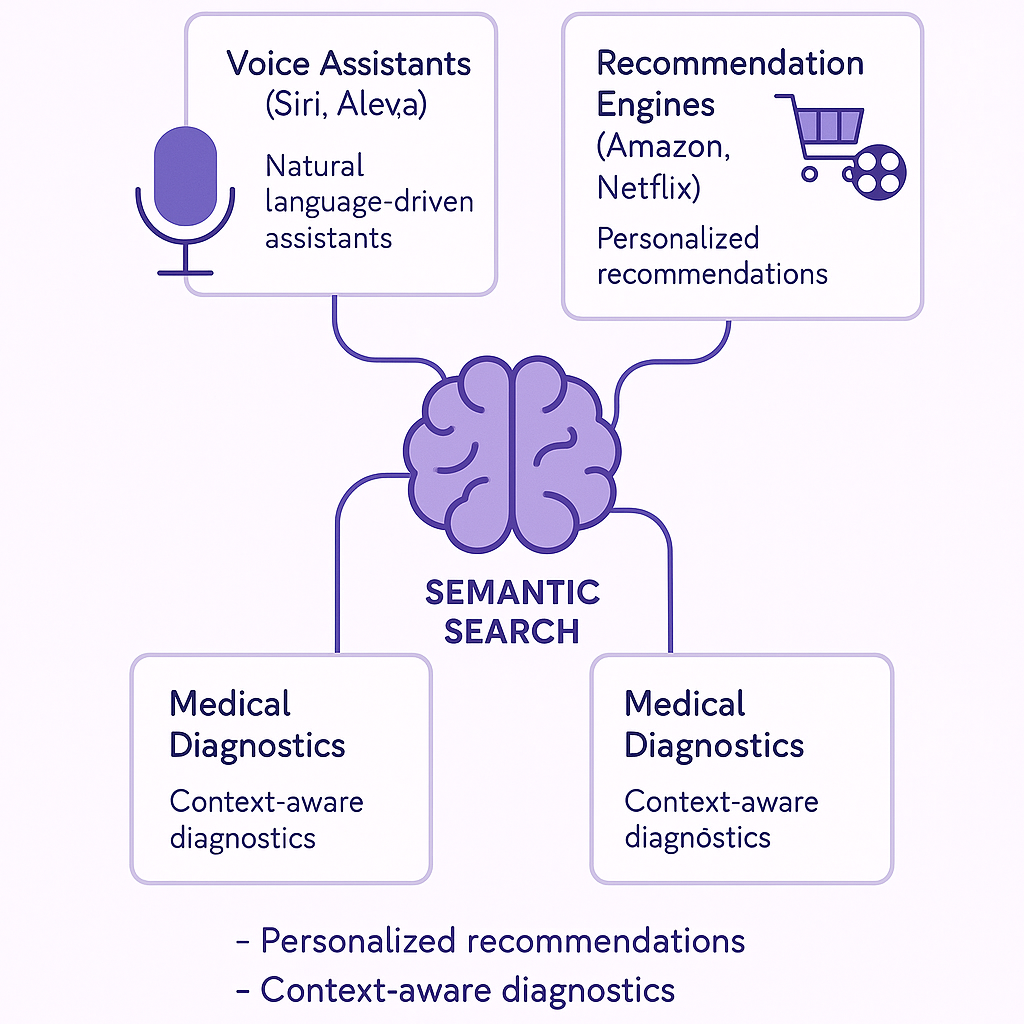
Semantic search isn’t miles away, sitting in some hi-tech lab. It’s a close reality, ingrained in our daily lives in ways we often overlook. Take our voice assistants, for instance. From Siri to Alexa, these little helpers are more than just programmed robots. Their intelligence springs from semantic search. When you ask Siri about the weather, she’s not just fetching numbers; she comprehends your question, applies context and delivers a contextually accurate response.
Consider search engines, they have evolved beyond parroting back keyword matches. Powered by semantic search, Google delivers almost intuitive search results, understanding the underlying intent of your query.
Now picture your Netflix or Amazon personal recommendations. These aren’t random suggestions; they are based on a semantic understanding of your preferences and patterns. The ability to deliver truly personalized suggestions stems from the intelligence of semantic search.
Lastly, in the medical field, semantic search is becoming an ally in diagnostics. Sophisticated tools are being developed that understand the correlation between symptoms and illnesses. These AI algorithms don’t just identify potential diseases but predict their onset based on a semantic interpretation of patient records.
So, semantic search might feel like a silent revolution, but its echoes are already transforming industries. It’s here, and it’s refining your digital experiences, one interaction at a time.
Niche Needs, Tailored Tools: Semantic Search in Action
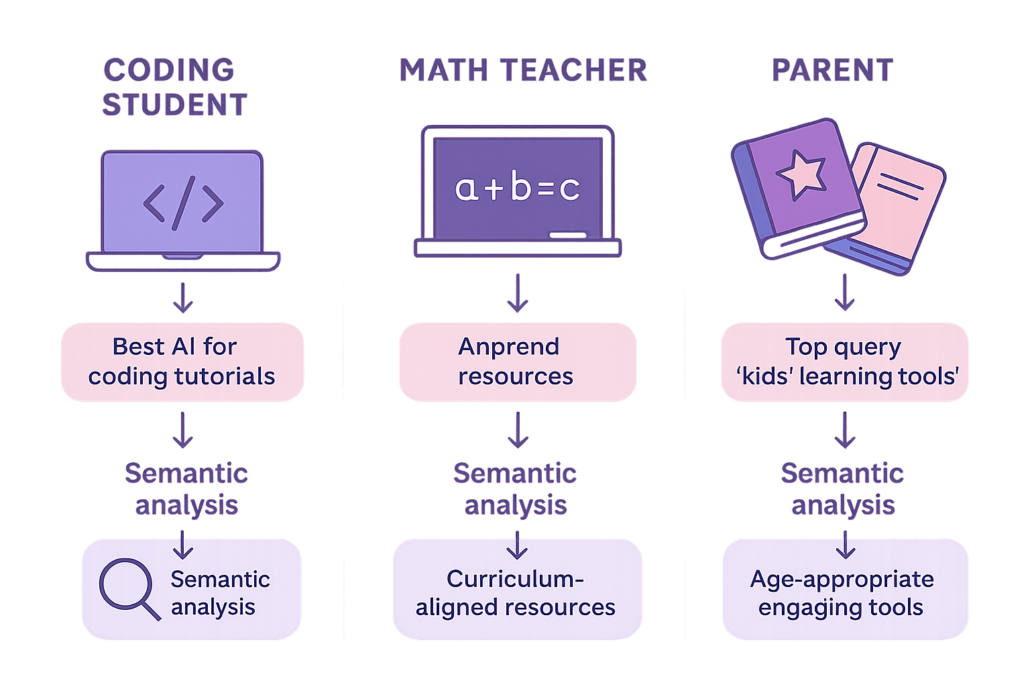
Imagine you’re a computer science student looking for the best AI for coding. A traditional keyword search might offer you a slew of generic AI resources, overwhelming rather than helpful.
Enter Edubrain, employing the principles of semantic search. It doesn’t just churn out endless coding tool options; the platform understands you need more. It scoops up resources fitting your skill level, finds tutorials on coding with AI, and even offers best practices for coding enthusiasts.
Shift the focus to a math teacher in search of cutting-edge AI tools for math teachers. Semantic search doesn’t bombard them with all AI education tools, it pinpoints resources matching specific curriculum standards or pedagogical methods.
From parents rummaging the internet to find the best AI tools for kids, semantic search comes into play again, dispensing age-appropriate, educational content tailored to individual learning styles instead of generic results. Now, that’s a winning situation for both parents and children.
Semantic search has thus evolved from simple keyword matching to a more attuned understanding of user intent. It’s not about the number of results, but the relevance that each tool like Edubrain strives for with semantic search.
Context Matters: Shaping SEO and Content Strategy
Let’s frame this in a real way. Say, you’re a business strategist looking to boost your brand’s online presence. Ignoring semantic search is not an option. In fact, understanding this shift towards the contextual meaning in search drags you out of the crowd, pointing you to the right direction.
It’s like planning a road trip. Keywords? They are the roadside signs. Semantic search? It’s your intelligent GPS, predicting traffic, suggesting the fastest route and even reminding you of your preferences. To win at the SEO game, you stop relying merely on those signs, instead tapping into the power of that AI-driven GPS.
With semantic search, content strategy takes a similar turn. No longer can you flood your content with keywords and expect stellar Google rankings. Your consumer-desired, relevant content is now the kingpin. From meaningful blog posts to comprehensive, authoritative whitepapers, it’s about delivering value that the consumer seeks.
Let’s not forget, the world of data analysis and competitive intelligence is also abuzz with the implications of semantic search. Gaining an upper hand requires an in-depth understanding of semantic search, its applications in refining user experiences, and its leverage in offering comparative insights.
Don’t just view semantic search as a new tech trend. Grasp it as a seismic shift – a revolution right under our noses. It’s about learning to decode this silent language of intent and context. Remember, staying relevant in this fast-paced digital age demands not just understanding but mastering this change.
Adapting to the Era of Semantic Search: Your Must-do List
Ready to dive into the world of semantic search? Here’s your action plan. First, set your sights on understanding user intent rather than simply focusing on keywords. Keywords are important, but they’re mere stepping stones towards the bigger picture of user intent.
Next, expand your content strategy to include comprehensive, topic-cluster content. Broaden your horizons; don’t be confined to isolated topics.
Third, capitalize on natural language queries. Don’t just think about what words people type. Ponder on how they string these words together.
Fourth, put some elbow grease into your internal linking and knowledge graphs. These aren’t just nice-to-haves; they’re foundational elements for semantic success.
And finally, keep your radar up for conversational AI trends. They’re no passing hype, and they’re leaving indelible marks on semantic search. The world is getting chattier, and so is AI. Make sure you’re part of the conversation.
This is your handbook for marching in tune with the changing rhythms of AI and search technology. Brace yourself for a transformative journey and gear up for a new era.
Semantic Search: AI’s Undeniable Triumph
In essence, semantic search marks more than just a technological update; it forms a groundbreaking shift, laying a foundation for AI to emulate human-like understanding and thinking. It is not merely a switch but a compass that steers intelligent systems towards deciphering intents and delivering personalized experiences.
AI’s evolution is intertwined with the advancement of semantic search, forming the backbone of the digital revolution. A more intuitive, more helpful future is being forged where understanding isn’t limited to text but encompasses context, too.
This might make us question: are we the architects shaping AI, or is AI reshaping us? As the line blurs, we continue to tread on an exciting journey, leaving no stone unturned in the exploration of AI and human-computer interaction.